Before your Fishing Charter leaves the dock, you will want your fishing documents ready alongside your jacket, snacks, and camera. For salmon fishing in Washington’s marine waters, one of those documents is a catch record card. It is the official record of the salmon you keep, and it serves a different purpose from your fishing license.
Washington introduced electronic catch record cards for salmon and certain other fisheries beginning April 1, 2026. For the 2026–27 license year, anglers can use the authorized mobile system or continue with paper, depending on their licensing selection. Here is what that means when preparing for a Puget Sound fishing trip.
A Fishing License and Catch Record Card Do Different Jobs
A fishing license provides the applicable fishing privileges. A catch record card, often shortened to CRC, documents retained catch for species covered by the reporting requirement.
Washington requires an appropriate catch record card when fishing for salmon in marine waters. Having a license does not replace that requirement, and a catch record card does not replace a required license.
For guests, the practical step is to confirm both before departure. Tell the charter operator what documents you already have and ask what you still need.
This is especially helpful if you usually fish in another state. A familiar routine at home may not match Washington’s requirements, and resolving questions before boarding leaves more time to enjoy the morning.
What Changed for the 2026–27 License Year?
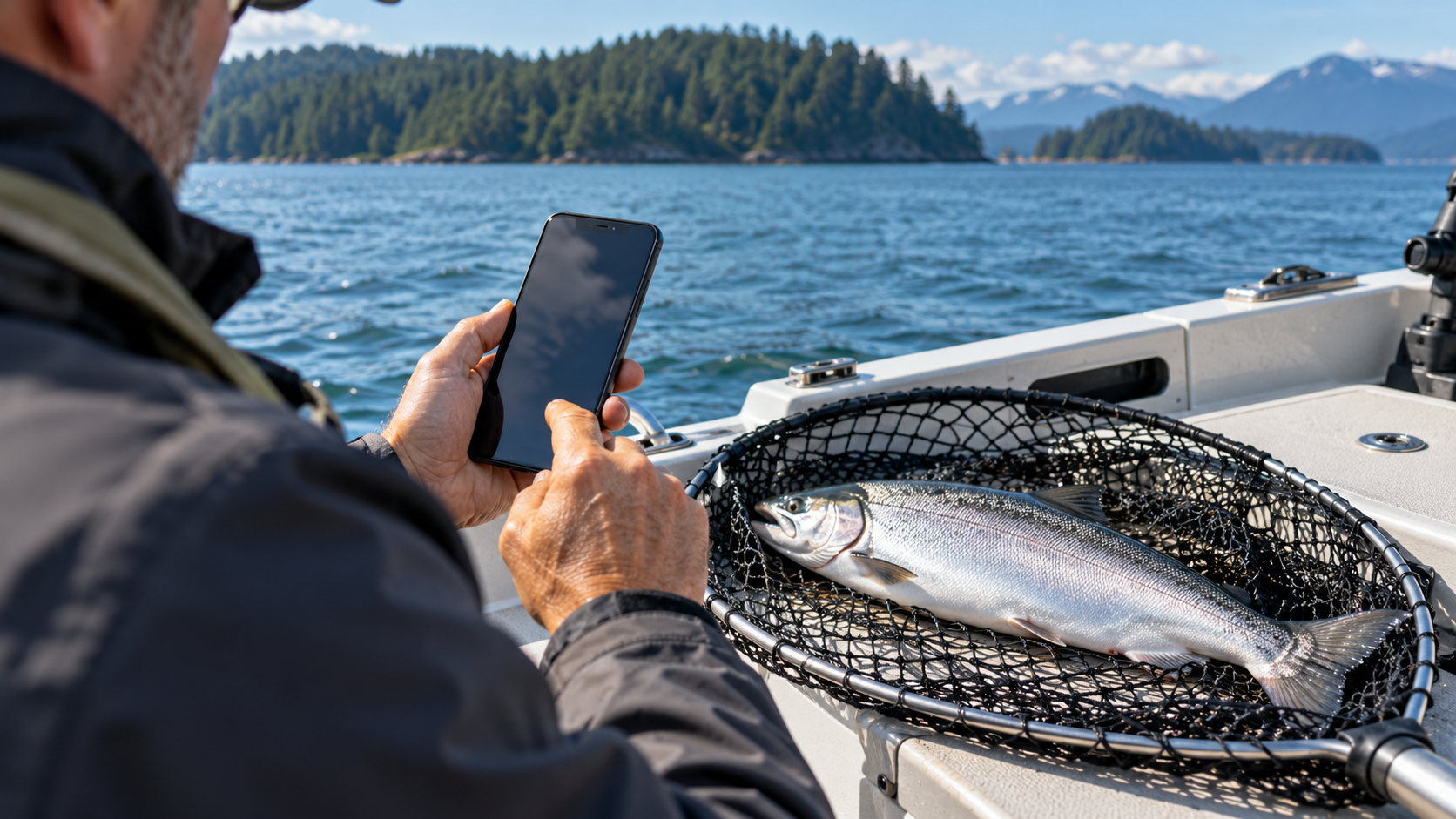
Electronic catch record cards, or eCRCs, are available through the MyWDFW and Fish Washington mobile apps. They let eligible mobile license holders record catches using a device instead of writing them on a paper card.
The digital option changes how you record and submit information. It does not remove your responsibility to document retained fish.
WDFW explains that your mobile or paper selection applies to eligible license products for the license year. If you choose mobile licensing, prepare to use that system for the year rather than treating paper and electronic records as interchangeable backups.
Before choosing, think about how you fish. If you are comfortable managing an app and keeping a device charged, electronic reporting may be convenient. If you prefer paper, that option remains available.
Set Up Your Electronic Card Before Fishing
Give yourself time to prepare while you have reliable internet access. The dock is a much nicer place to watch the sunrise than recover a forgotten password.
To get ready:
- Access your WDFW licensing account.
- Confirm your mobile licensing selection.
- Obtain the appropriate fishing license and add the required catch record card.
- Install or update an authorized app.
- Sign in and confirm that both your license and card are visible.
WDFW specifically notes that the salmon catch record card is free but still needs to be added to your account. Simply downloading the app does not provide the necessary documents.
Once everything is visible, familiarize yourself with where catch entries are made. You do not need to create a practice catch. Just know how to reach the correct screen and ask for help if anything is unclear.
Record a Kept Salmon Immediately
When you retain a salmon, record it immediately before continuing to fish.
Required information includes the catch location, date, species, and whether the salmon has a clipped adipose fin. Paper entries must be made in ink; electronic entries must use the department-authorized app.
Ask your captain to help you identify the correct species and catch area when needed. Do not guess based only on the departure marina or where you think the boat has traveled.
For a first-time guest, unfamiliar codes can look more complicated than they are. Take a moment, confirm the details, and complete the entry while the information is fresh. Saving the paperwork for the ride home is not the right approach.
Can Electronic Reporting Work Without Cell Service?
Yes. WDFW says the apps can store entries offline and upload them when service returns, provided you have logged in beforehand. Confirm your documents are loaded before leaving coverage.
A little device preparation is worthwhile:
- Fully charge your phone.
- Bring a suitable portable charger.
- Protect the device from spray.
- Know where your license and card appear.
- Check that offline entries synchronize when you reconnect.
Mobile license customers are responsible for having a working device capable of displaying their privileges for inspection. A dead battery is therefore more than a missed photo opportunity.
If you experience a technical problem before departure, address it with WDFW and the charter operator before fishing.
Paper Cards Are Still an Option
Paper reporting remains available. Carry your issued card, keep it readable, and bring a working pen.
Protecting documents matters on any charter boat. Use a waterproof holder or secure bag, and keep it somewhere accessible rather than at the bottom of your luggage.
Paper fish catch record cards are due by April 30 following the end of the license year, including when no fish were retained. For the 2026–27 license year, that means April 30, 2027. Follow WDFW’s current return instructions.
If someone helps organize your documents, make sure you understand who will handle the final reporting step. A reminder on your calendar can keep a great fishing day from becoming forgotten paperwork months later.
What Should Charter Guests Ask Before Departure?
Contact Puget Sound Sports Fishing before your trip and explain whether you already hold Washington fishing documents.
The company lists one-day fishing licenses as available aboard its charters. Confirm current arrangements and how the appropriate catch record card will be handled for your visit, especially if you already use mobile licensing.
Ask about every angler in your party, including children. A family organizer should not assume that one person’s card covers everyone.
Preparing these details is part of responsible charter fishing. It also helps you arrive focused on the experience, whether you are an experienced angler or a visitor trying Seattle fishing for the first time.
Frequently Asked Questions
Is a salmon catch record card the same as a fishing license?
No. The license provides applicable fishing privileges, while the catch record card documents retained catch. Confirm that you have both when required.
Can I record my salmon after the trip?
No. Record a retained salmon immediately before continuing to fish. Ask the captain for help with unfamiliar catch details.
Do I have to use the new electronic system?
No. Paper remains an option. Use the method associated with your licensing selection and follow its requirements.
Does downloading Fish Washington give me a catch record card?
No. You must obtain the appropriate card and confirm it appears in your account before using electronic reporting.
Why does WDFW collect catch information?
Catch records help WDFW estimate recreational harvest and support fisheries management. Accurate reporting contributes useful information about the fish anglers retain.
Get Ready for Your Puget Sound Fishing Trip
Getting your documents ready is a small step toward an enjoyable day on the water. For salmon fishing adventures near Seattle, contact Puget Sound Sports Fishing in Edmonds, WA, and confirm your licensing and catch-record arrangements before departure. Spots are limited, so book your fishing charter today and start planning your next Puget Sound outing.