If you are getting ready for your first Fishing Charter, there is a good chance you will hear the word “trolling” before the day is over. No, it has nothing to do with leaving questionable comments on the internet. In Salmon Fishing, trolling is a proven technique that involves moving a Charter Boat through the water while presenting bait or lures at carefully controlled depths. It is one of the most important methods used for Charter Fishing throughout Puget Sound and gives anglers an exciting opportunity to connect with moving salmon.
For beginners, trolling can look simple.
Put the lure in the water. Drive the boat. Catch a fish.
There is quite a bit more happening behind the scenes.
How Does Trolling Work?
Instead of casting toward a specific location and retrieving your lure, trolling allows the boat to move the fishing presentation through a larger area of water.
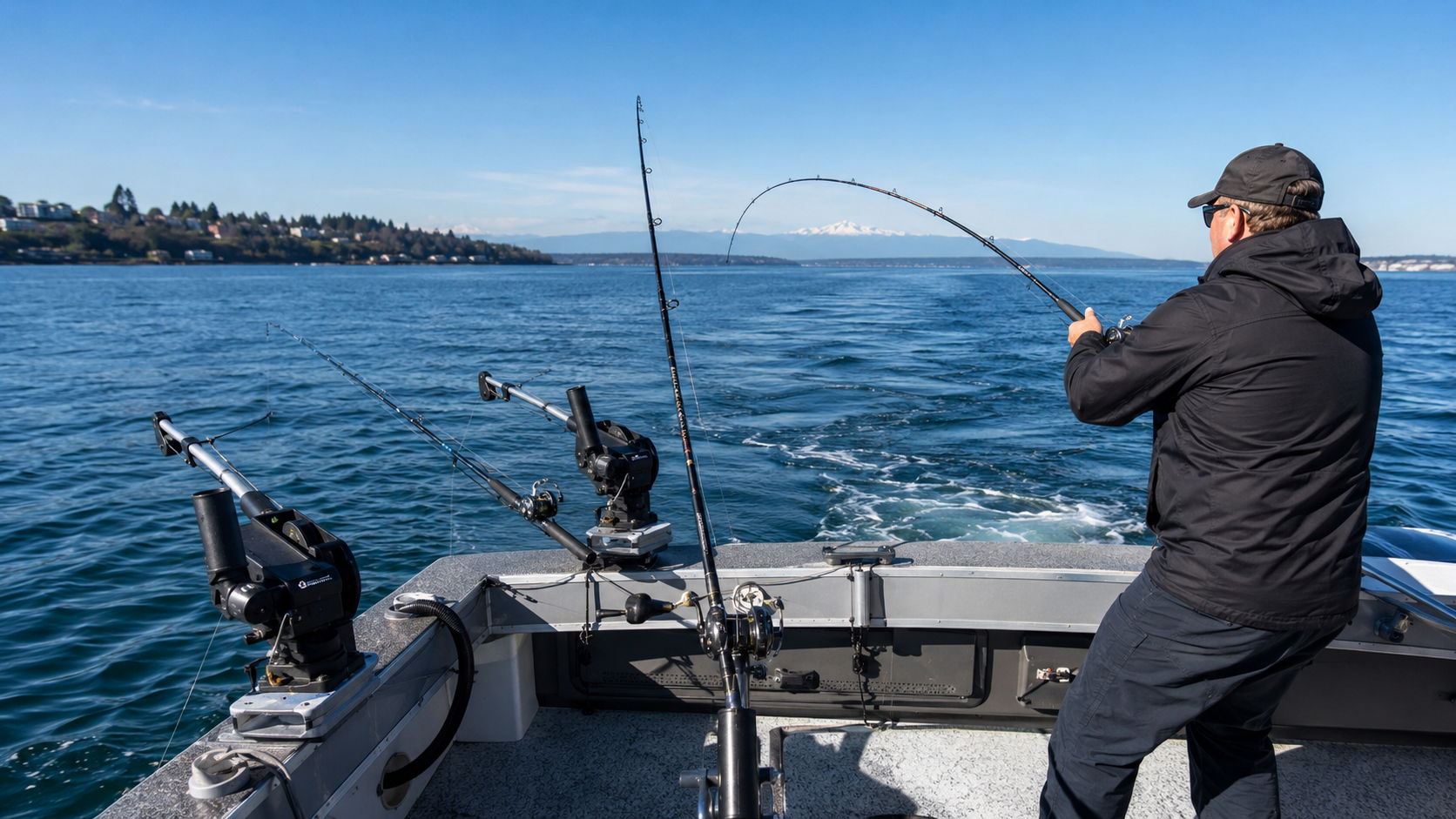
Rods are positioned around the boat while lines trail behind or below it.
The goal is to place bait or lures where salmon are likely traveling or feeding and keep them moving at an attractive speed.
On professional Fishing Trips, the captain and crew constantly monitor the equipment, water depth, speed, current, and location.
That means your line is not simply dragging somewhere behind the boat hoping for a miracle.
Everything is being presented deliberately.
Why Trolling Works Well for Salmon Fishing
Salmon move.
A lot.
Depending on the season, tides, baitfish, and other conditions, they may travel through different depths and areas of Puget Sound throughout the day.
Trolling allows a Fishing Charter to cover water efficiently while searching for active fish.
Instead of waiting for salmon to swim toward you, the boat can move through productive areas and present gear to more fish.
This approach is especially useful in the large saltwater environment around Seattle and Edmonds, WA.
What Is a Downrigger?
One piece of equipment you may see aboard a salmon Charter Boat is a downrigger.
A downrigger allows fishing gear to be presented at a controlled depth.
The system typically uses a weighted line that travels down through the water. Your fishing line is temporarily attached to the downrigger line through a release mechanism.
The weight takes the gear down to the desired depth without requiring a huge amount of weight directly on your fishing rod.
When a salmon strikes and the fishing line releases, you fight the fish directly with your rod and reel.
That moment can be surprisingly dramatic.
One second everything looks calm.
The next second someone is telling you to grab the rod.
Welcome to Salmon Fishing.
Why Depth Matters
The water beneath Puget Sound is not one giant swimming pool where every salmon hangs out at exactly the same depth.
Fish may be found higher or lower in the water column depending on conditions.
A professional Fishing Charter may adjust lines throughout the trip based on where salmon or bait appear to be concentrated.
Modern equipment can help identify underwater features and activity, but the captain’s experience interpreting conditions remains important.
Knowing that fish are somewhere below you is one thing.
Knowing how to present your gear effectively to them is another.
What Happens When a Salmon Bites?
This is the part everybody remembers.
When a salmon strikes a trolled bait or lure, the rod may suddenly bend and the line can release from the downrigger.
Someone aboard the boat will usually alert the angler.
At that point, your job becomes beautifully simple:
Hold on.
Your captain or crew can coach you through the fight, especially if this is your first time Salmon Fishing.
You may be encouraged to keep steady pressure on the fish, reel when possible, and avoid creating slack in the line.
The salmon, meanwhile, has absolutely no interest in cooperating.
That is what makes it fun.
Do Beginners Need to Know How to Troll?
Not at all.
One of the biggest advantages of booking a Fishing Charter is being able to learn while doing.
You do not need to arrive knowing how to rig a line, operate a downrigger, choose a trolling speed, or identify the perfect fishing depth.
Your captain manages the technical side and helps you understand what to do when it is your turn on the rod.
This makes Charter Fishing a great introduction to Seattle Fishing for people who have never caught salmon before.
Rather than spending your first trip worrying about equipment, you can focus on learning, participating, and enjoying the experience.
How Boat Speed Affects Trolling
Trolling speed is one of those details that looks boring right up until you realize how important it can be.
Different presentations perform differently depending on how quickly they move through the water.
Current also matters.
The Charter Boat might appear to be traveling at one speed, while the bait experiences something entirely different beneath the surface.
An experienced captain adjusts speed and direction to keep the fishing presentation working properly.
These small adjustments happen throughout the trip.
They are easy for guests to overlook, but they are a major part of professional Charter Fishing.
Why Captains Change Direction
If your Fishing Charter suddenly makes a turn, there may be a strategic reason.
Changing direction can change:
- The speed of individual lines through the water
- The depth or angle of presentations
- How the gear moves through current
- Which underwater contour the boat follows
- The area covered by the trolling pattern
Sometimes one side of the Charter Boat may even get a strike during a turn because its lure temporarily speeds up or slows down.
Salmon have a funny habit of reminding us that they make the final decision.
What Types of Gear Are Used While Trolling?
Specific setups vary depending on conditions and target species, but salmon trolling commonly involves combinations of bait, artificial lures, attractors, leaders, rods, reels, and depth-control equipment.
The important thing for charter guests is that you do not need to purchase an entire garage full of fishing equipment before your trip.
That is one of the practical benefits of guided Fishing Trips.
You get to experience quality salmon fishing equipment and techniques without first becoming a tackle-store shareholder.
Why Local Experience Matters
Trolling is not simply a mechanical process.
Local knowledge matters because Puget Sound contains changing currents, depths, underwater structure, seasonal salmon movement, and productive fishing areas that behave differently depending on conditions.
A captain who spends significant time fishing these waters learns patterns that cannot be picked up from a five-minute tutorial.
That experience helps determine:
- Where to begin trolling
- What depth to target
- Which direction to travel
- When to adjust speed
- When to change locations
- How to respond when fish begin biting
For visitors enjoying Seattle Fishing, this expertise removes a lot of trial and error from the day.
The Experience Is More Than the Technique
Trolling also gives anglers time to enjoy everything surrounding the fishing.
Between bites, you can take in the scenery of Puget Sound, talk with friends or family, learn from your captain, and watch the water.
Then the rod bends.
Suddenly, everyone on the boat becomes extremely interested in what is happening.
That mix of peaceful scenery and unpredictable excitement is a big part of why people return to Salmon Fishing.
Frequently Asked Questions About Trolling for Salmon
What does trolling mean in fishing?
Trolling is a fishing technique where bait or lures are pulled through the water behind a moving boat.
Why do salmon fishing charters use downriggers?
Downriggers help place fishing presentations at controlled depths, allowing anglers to target salmon located deeper in the water.
Can beginners use a downrigger?
Yes. On a guided Fishing Charter, the captain or crew typically manages the technical setup and can show guests how the equipment works.
Do I have to cast while trolling?
Usually not. The gear is placed behind or below the boat and then moved through the water as the boat travels.
Is trolling good for first-time anglers?
Yes. Because the captain manages boat position, speed, depth, and equipment, trolling lets beginners participate in Salmon Fishing without needing years of experience.
Learn Salmon Fishing on the Water
You can watch videos about trolling all day, but the technique makes much more sense once you see it working from an actual Charter Boat. If you are ready to experience Seattle Fishing firsthand, Puget Sound Sports Fishing offers guided Fishing Trips departing from Edmonds, WA and exploring the incredible waters of Puget Sound. Come learn how trolling works, enjoy the scenery, and be ready when that rod finally bends. Popular dates can fill quickly, so book your Fishing Charter today.