One of the most important things you may learn on a Fishing Charter is how to recognize the difference between hatchery and wild salmon. To a new angler, two freshly caught salmon may look almost identical. Both can have bright silver sides, powerful tails, and a strong desire to avoid joining you for dinner. However, one small fin can often help determine whether a salmon may be kept or must be carefully released.
Understanding that difference is an important part of responsible salmon fishing in Puget Sound. It helps anglers follow current regulations, supports selective harvest, and protects naturally produced salmon as they return to their home rivers and streams.
What Is a Hatchery Salmon?
A hatchery salmon begins its life in a managed fish hatchery rather than naturally spawning in a river or stream. Washington hatcheries raise juvenile salmon and release them into local waterways, where they migrate to the ocean and eventually return as adults.
Hatchery programs help provide harvest opportunities for recreational, commercial, and tribal fisheries while fishery managers work to protect natural-origin salmon populations. Washington operates an extensive hatchery system involving state, federal, and tribal facilities. According to the Washington Department of Fish and Wildlife, virtually all hatchery-produced coho and Chinook salmon in Washington are marked by removing their adipose fin before release.
These fish still spend much of their lives in the same marine environment as wild salmon. They migrate, feed, grow, and fight just as hard when they take the bait. A hatchery salmon does not arrive with a tiny name tag or a polite note explaining where it came from, so anglers rely primarily on the fin clip to identify it.
What Is a Wild Salmon?
A wild salmon, also called a natural-origin salmon, is produced naturally in a river or stream. Adult salmon return to freshwater spawning areas, lay their eggs, and begin the next generation without being raised in a hatchery.
These naturally reproducing populations are an important part of the Pacific Northwest ecosystem. Salmon transport nutrients from the ocean into rivers and surrounding environments, provide food for wildlife, and support the long-term health and diversity of regional salmon runs.
Wild Puget Sound Chinook are especially important from a conservation standpoint because Puget Sound Chinook salmon are protected under the Endangered Species Act. Mark-selective fisheries are designed to provide opportunities to harvest hatchery salmon while limiting impacts on unmarked natural-origin fish.
Check the Adipose Fin
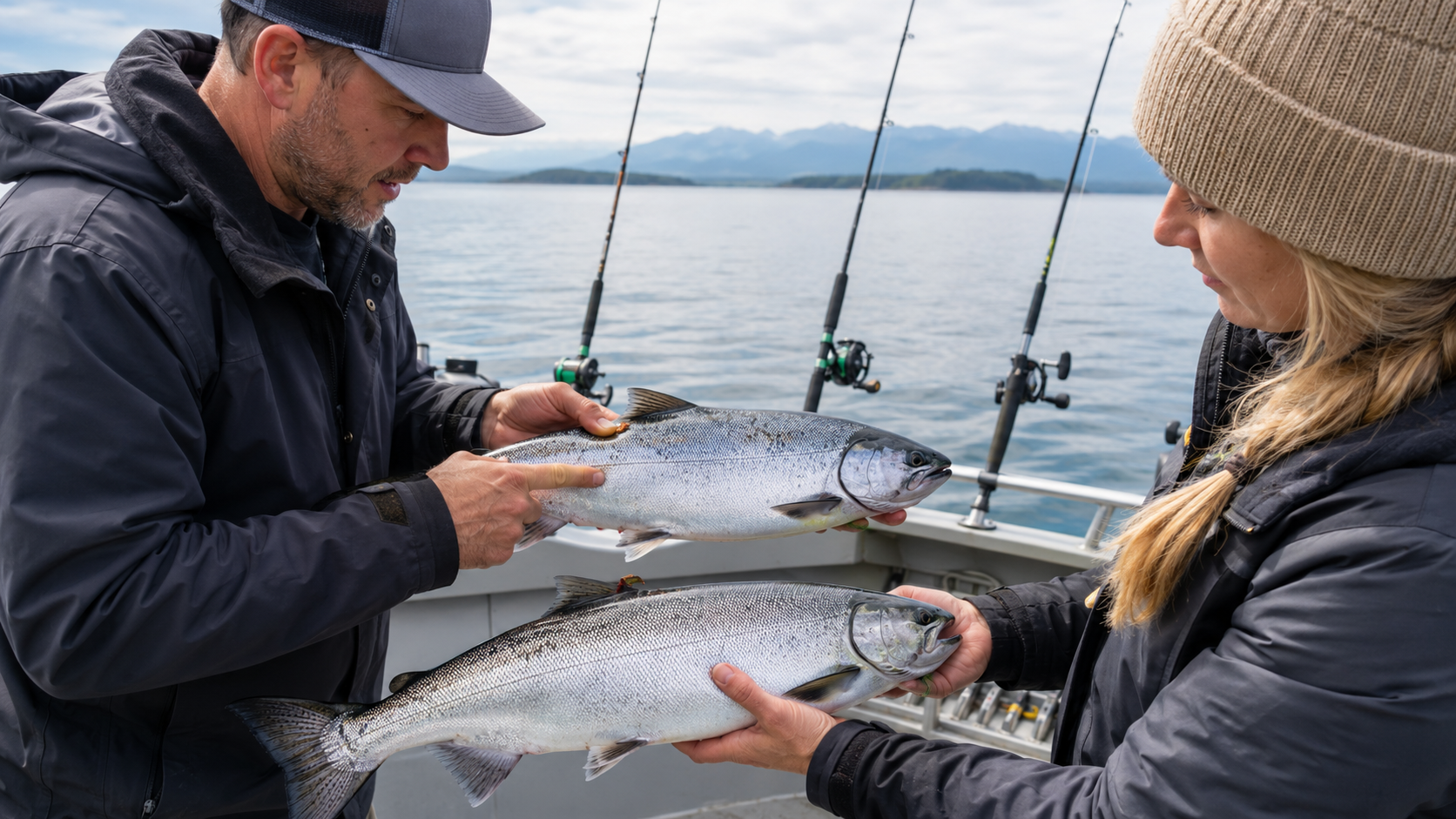
The easiest field indicator for distinguishing hatchery and wild salmon is the adipose fin. This is the small, fleshy fin located on the salmon’s back between its main dorsal fin and its tail.
A salmon with a missing adipose fin and a healed scar is generally identified as a marked hatchery fish. A salmon with an intact adipose fin is generally treated as an unmarked, natural-origin fish.
Here is the quick version:
Clipped or missing adipose fin: Usually a hatchery salmon
Intact adipose fin: Usually a wild or natural-origin salmon
WDFW uses the terms “marked” for adipose-fin-clipped fish and “unmarked” for fish with an intact adipose fin. In many mark-selective fisheries, anglers may retain qualifying marked hatchery salmon but must release unmarked salmon unharmed.
The word “usually” matters. An adipose fin clip is the primary field identification method, but it is not a perfect biological test. WDFW describes unmarked salmon as predominantly natural-origin because an occasional hatchery fish may not be clipped. That is why anglers should follow the legal definition in the current regulations rather than trying to determine a fish’s entire family history while it is beside the boat.
What Is Selective Harvest?
Selective harvest allows anglers to keep certain hatchery-produced fish while releasing protected or conservation-sensitive salmon. It is one way fisheries can continue providing recreational opportunities while reducing pressure on natural-origin populations.
Washington began using large-scale salmon marking programs to make selective fisheries practical. When a marked hatchery salmon is caught, the missing adipose fin gives anglers and fishery managers a visible way to identify it. When an unmarked salmon is caught during a mark-selective season, it is released so it can continue migrating and potentially reproduce.
Mark-selective fisheries have been used in Puget Sound for many years. Their purpose is to increase fishing opportunities for hatchery salmon while limiting impacts on natural-origin stocks, particularly protected Puget Sound Chinook.
This approach gives anglers the excitement of Salmon Fishing while supporting the broader effort to maintain healthy salmon runs for future generations.
Does Every Wild Salmon Have to Be Released?
Not necessarily. Salmon regulations can vary based on the marine area, species, season, date, fish size, and current management conditions.
Some fisheries are mark-selective, meaning only qualifying hatchery salmon may be retained. Other fisheries may be non-selective, allowing anglers to retain either marked or unmarked salmon when permitted. There may also be species-specific requirements, daily limits, minimum sizes, temporary closures, or emergency rule changes.
That is why anglers should never assume that the rule from a previous trip still applies. Washington’s recreational fishing seasons are established annually, and rules can be updated during the season based on salmon abundance, catch rates, quotas, and conservation needs. WDFW recommends checking the current fishing regulations and emergency rule changes before fishing.
One benefit of guided Charter Fishing is having an experienced captain who follows the current regulations for the area being fished. Before we head out, we review the applicable seasons, retention rules, size limits, and species requirements. That allows our guests to focus on the experience while we help make sure each fish is identified and handled appropriately.
What Happens When You Catch an Unmarked Salmon?
Catching an unmarked salmon can still be one of the most exciting moments of the trip. You get the strike, the fight, and the satisfaction of bringing the fish alongside the Charter Boat. The difference is that the fish may need to be released rather than retained.
When a salmon must be released, careful handling matters. The goal is to remove the hook efficiently, minimize unnecessary contact, and return the fish to the water as quickly and safely as possible.
General catch-and-release guidance includes bringing the fish in without exhausting it, keeping it in the water when possible, avoiding damage to its protective slime coating, and allowing it to regain its balance before swimming away.
Certain Puget Sound salmon fisheries may also include handling rules that prohibit bringing unmarked or undersized Chinook aboard the vessel. Requirements can change, so we always follow the current rules for the specific marine area and season.
Releasing a beautiful salmon can feel disappointing for a moment, especially after a hard fight. However, watching a wild fish swim away is also a meaningful part of fishing responsibly. That salmon may continue its journey, reach its spawning grounds, and contribute to another generation.
Why a Fishing Charter Helps Beginners
Identifying salmon can feel overwhelming when you are new to fishing. Along with checking the adipose fin, anglers may need to identify the species, measure the fish, confirm the season, and understand the daily retention rules.
Meanwhile, the salmon is moving, the boat is moving, and your friend is already asking whether this counts toward the group photo.
On our guided Fishing Trips, we help guests through each step. We identify the species, inspect the adipose fin, check the fish against current regulations, and explain why it can be kept or must be released.
This turns the experience into more than simply catching fish. Guests learn about Puget Sound salmon, responsible harvest, conservation, fishing techniques, and the role anglers play in protecting local fisheries.
You do not need previous experience to join us. We welcome first-time anglers, families, tourists, outdoor enthusiasts, and experienced fishermen looking for a knowledgeable local guide.
Experience Seattle Fishing With a Local Captain
Puget Sound offers an incredible fishing experience just minutes from Seattle. Our trips depart from Edmonds, WA, providing convenient access to productive waters between Seattle and Everett.
Puget Sound Sports Fishing has offered local fishing adventures since 1984, and Captain Murphy Pierson has more than 30 years of experience fishing these waters. Our trips include the fishing equipment, bait, tackle, guidance, and fish cleaning and bagging services needed for a comfortable day on the water.
Whether you are targeting Chinook, coho, or another available species, every trip offers an opportunity to learn something new. Sometimes the lesson is how to identify an adipose fin. Sometimes it is how to reel in a powerful salmon. Sometimes it is discovering that fish become approximately twice as heavy the moment someone asks you to hold one for a photo.
Learn, Fish, and Help Protect Puget Sound Salmon
Understanding hatchery vs. wild salmon is an essential part of responsible fishing in Washington. The small adipose fin helps anglers participate in selective harvest, retain eligible hatchery fish, and release unmarked salmon when regulations require it.
The process may seem complicated at first, but you will not have to figure it out alone. Our experienced crew will guide you through fish identification, current regulations, proper handling, and everything else you need for a safe and memorable adventure.
Join Puget Sound Sports Fishing for a guided Fishing Charter departing from Edmonds, WA, just minutes from Seattle. Come enjoy the scenery, learn about local salmon, and experience the excitement of fishing Puget Sound with a knowledgeable crew. Spots are limited, so book your fishing trip today and get ready for an unforgettable day on the water.
Frequently Asked Questions About Hatchery vs. Wild Salmon
How can you tell the difference between hatchery and wild salmon?
Check the salmon’s adipose fin, which is the small fin between the main dorsal fin and tail. A missing adipose fin with a healed scar usually identifies a marked hatchery salmon, while an intact adipose fin generally identifies an unmarked, predominantly natural-origin salmon.
What is the adipose fin on a salmon?
The adipose fin is the small, fleshy fin located on a salmon’s back between its dorsal fin and tail. Washington hatcheries remove this fin from most hatchery-produced Chinook and coho salmon before releasing the juvenile fish.
Does a clipped adipose fin mean a salmon is from a hatchery?
A clipped adipose fin with a healed scar is the primary field mark used to identify a hatchery salmon. WDFW refers to these fish as “marked” salmon.
Does an intact adipose fin always mean a salmon is wild?
Not always. An intact adipose fin identifies an unmarked salmon, which is considered predominantly wild or natural-origin for fishery-management purposes. Some hatchery fish may be unmarked, so anglers should follow the legal definitions in the current fishing regulations rather than treating the fin as a perfect biological test.
What is a mark-selective salmon fishery?
A mark-selective fishery allows anglers to retain qualifying adipose-fin-clipped hatchery salmon while requiring unmarked salmon to be released. The purpose is to create fishing opportunities while limiting impacts on natural-origin salmon populations of conservation concern.
Why are hatchery salmon marked?
Hatchery salmon are marked so anglers and fishery managers can distinguish them from predominantly natural-origin fish. Mass marking supports selective harvest and helps maintain recreational fishing opportunities while protecting vulnerable wild salmon stocks.
Can you keep a wild salmon caught in Puget Sound?
It depends on the species, marine area, season, size, and current regulations. Some Puget Sound fisheries are mark-selective and require unmarked salmon to be released, while other fisheries may permit the retention of certain unmarked fish. Always check current regulations and emergency rule changes before fishing.
What happens when you catch an unmarked salmon on a fishing charter?
When regulations require its release, an unmarked salmon should be handled carefully and returned to the water as quickly as possible. Certain Puget Sound fisheries may require unmarked or undersized Chinook to be released immediately without being brought aboard the boat.
Why must some salmon be released?
Some salmon must be released to protect natural-origin populations and meet conservation requirements. Mark-selective fisheries allow anglers to target hatchery salmon while reducing impacts on stocks such as ESA-listed Puget Sound Chinook.
Are salmon retention rules the same every year?
No. Salmon seasons and retention rules can change by year, date, species, marine area, fish size, catch quota, and in-season management conditions. A salmon that could be legally retained during one trip may need to be released under a different season or set of regulations.
Will the captain help identify hatchery and wild salmon?
Yes. On a guided Fishing Charter, the crew helps identify the salmon species, inspect the adipose fin, confirm whether the fish meets current retention requirements, and explain why it may be kept or must be released.
Do beginners need to know how to identify salmon before booking?
No previous salmon-identification experience is required. The crew guides first-time anglers through the fishing equipment, species identification, adipose-fin check, current regulations, and proper fish handling during the trip.
Are hatchery salmon different to catch than wild salmon?
Hatchery and wild salmon spend much of their lives in the same marine environment and can both provide an exciting fight. The main practical difference for anglers is whether current regulations allow the fish to be retained.
Where do Puget Sound salmon fishing charters depart?
Puget Sound Sports Fishing departs from the Port of Edmonds at 300 Admiral Way, Dock T, in Edmonds, WA. The location provides convenient access to Puget Sound fishing waters just north of Seattle.